


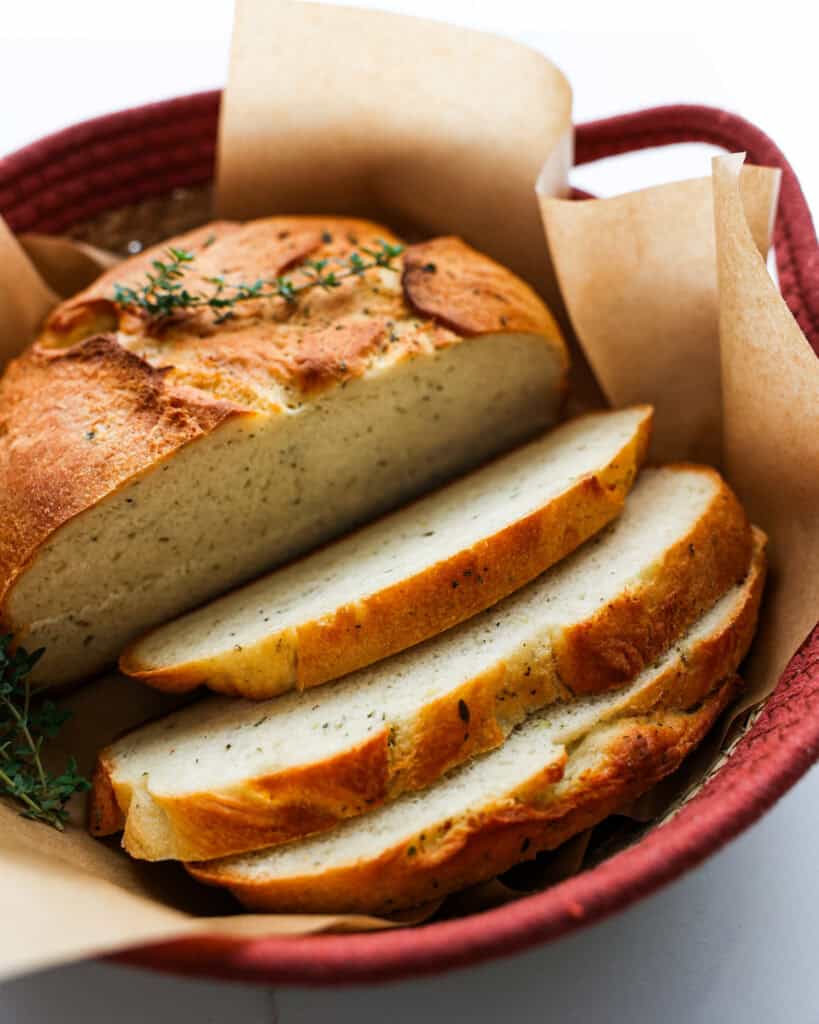
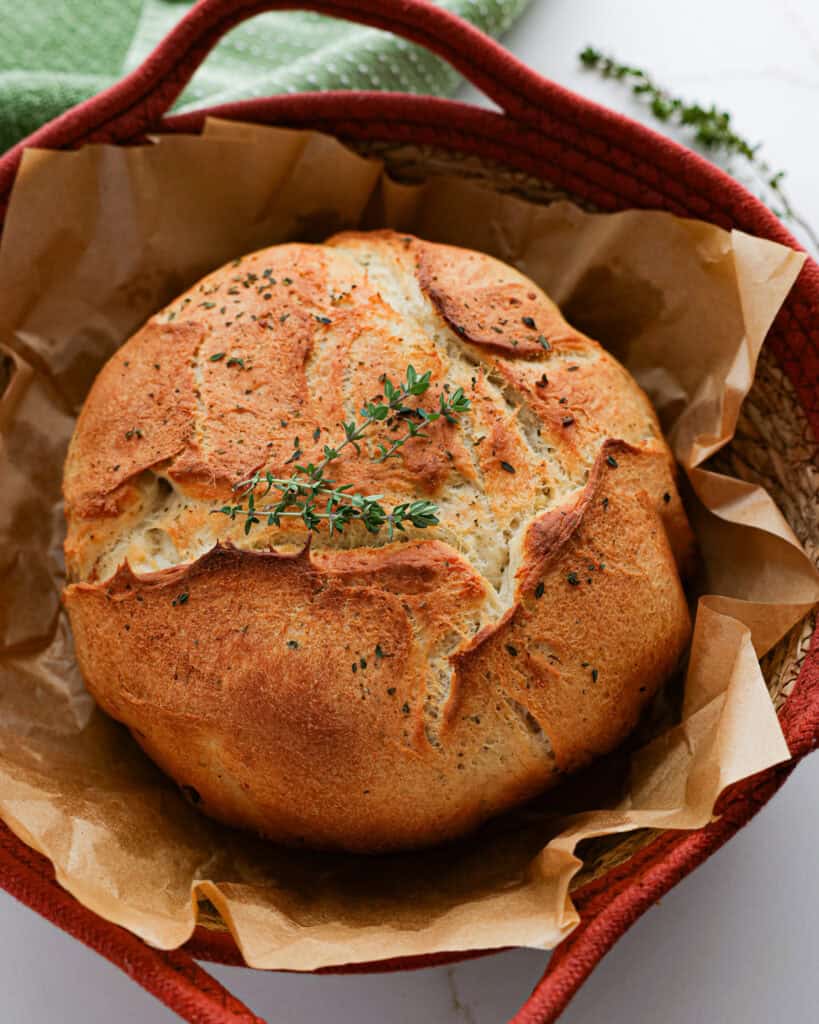
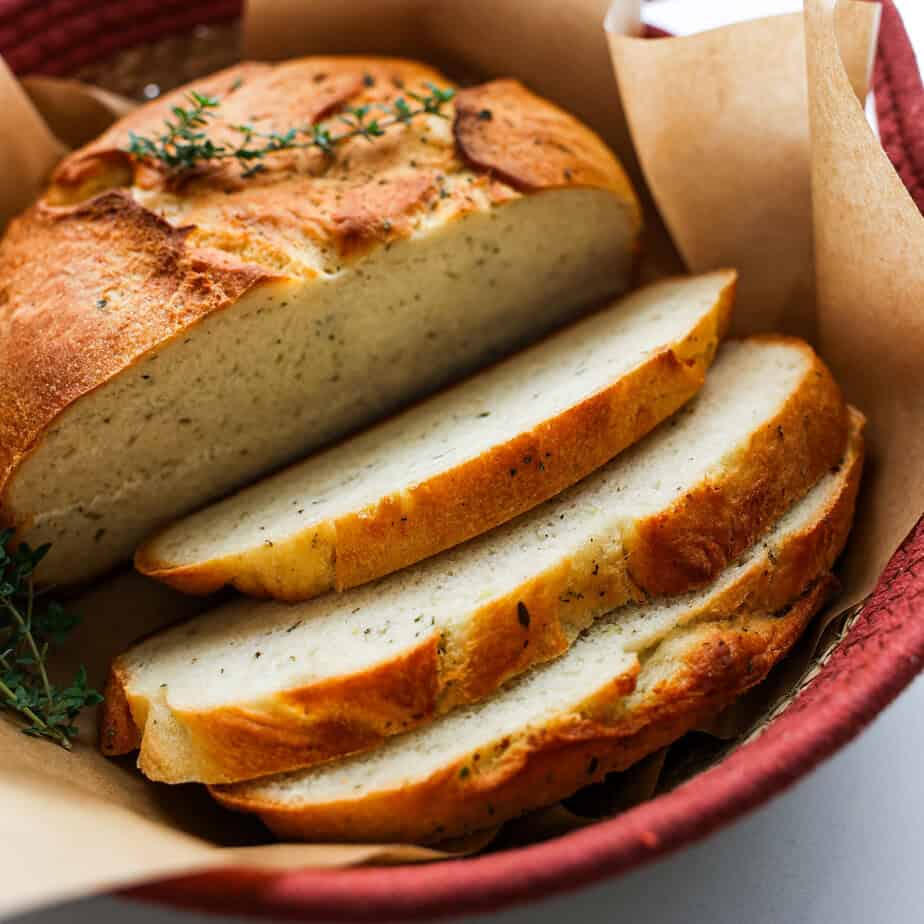
This Cottage Cheese Bread is a protein-rich rustic loaf with a golden-brown crust and a springy crumb enhanced with garlic and thyme. Serve this tasty loaf with all your favorite pasta, soup, and salad recipes.
Substitutions and Ingredient Notes
See the recipe card below for the complete ingredient list.
- Cottage cheese: Use full-fat, 4%, or 2% for the best flavor and texture. Avoid fat-free cottage cheese.
- Butter: Use unsalted or salted butter. If using salted butter, reduce the added salt by a couple of pinches.
- Bread flour: I prefer bread flour over all-purpose flour for a chewier texture, larger air pockets, and taller rise.
- Fresh garlic: As one of the stars of the show, use fresh for optimum flavor.
- Fresh thyme: Fresh herbs are paramount for making this bread shine. My go-to is thyme, but you can substitute fresh rosemary, dill, chives, basil, or parsley.
- Dried herbs: Fold in a little dried marjoram or oregano.
How To Make Cottage Cheese Bread
This is a summary; for the complete list of ingredients and instructions, see the recipe card below.
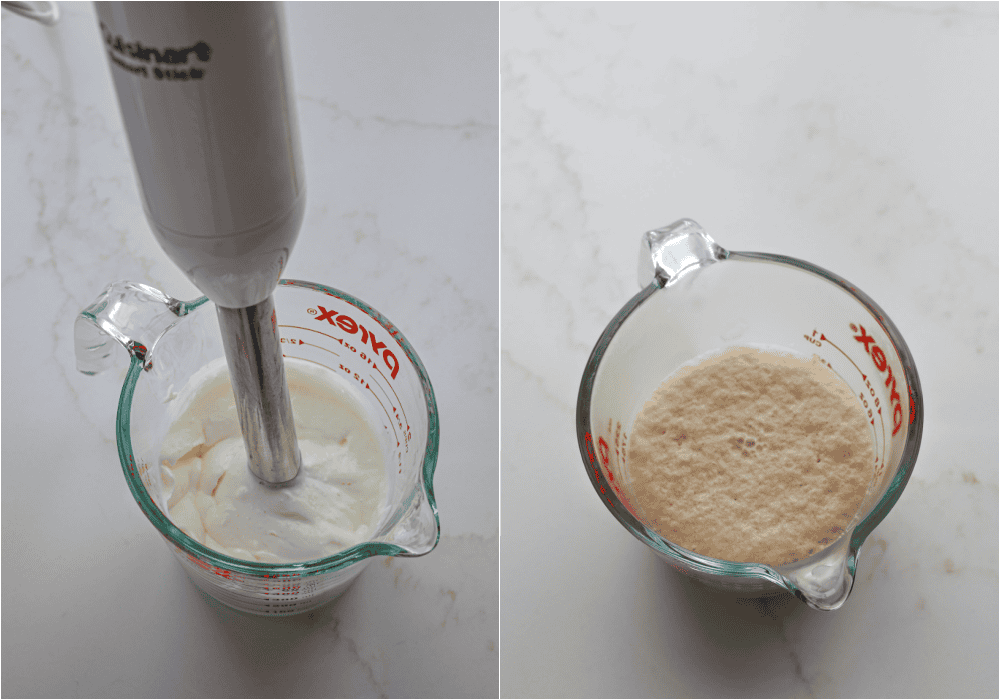
- Using an immersion blender or food processor, cream the cottage cheese.
- Gently whisk the warm water, yeast, and a tablespoon of sugar. Cover the measuring cup or bowl with plastic wrap and let it sit for about 7-10 minutes to bloom the yeast.
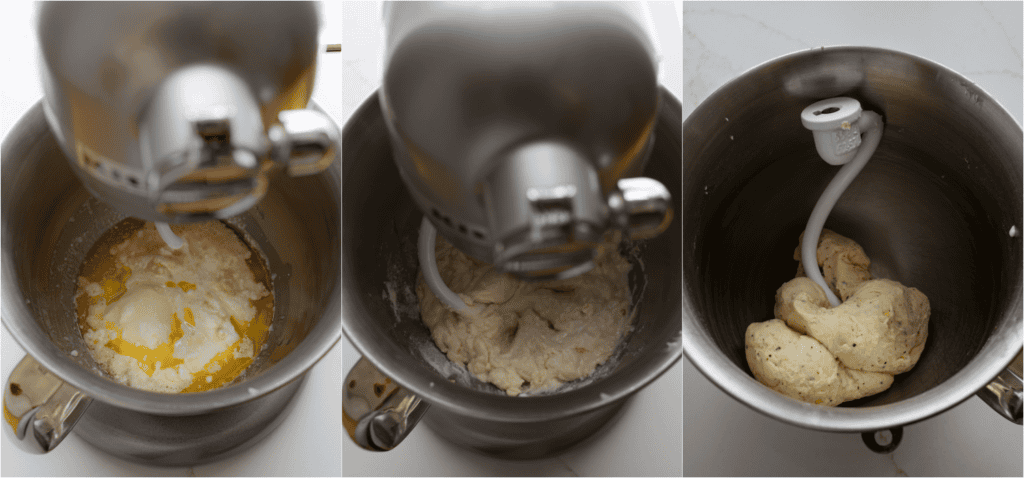
- In a stand mixer with the dough hook, combine the yeast mixture, blended cottage cheese, butter, salt, flour, garlic, thyme, marjoram, and the remaining sugar. Start on low speed (1) to incorporate the flour, then increase a little bit (2) speed and knead for about 7-8 minutes.
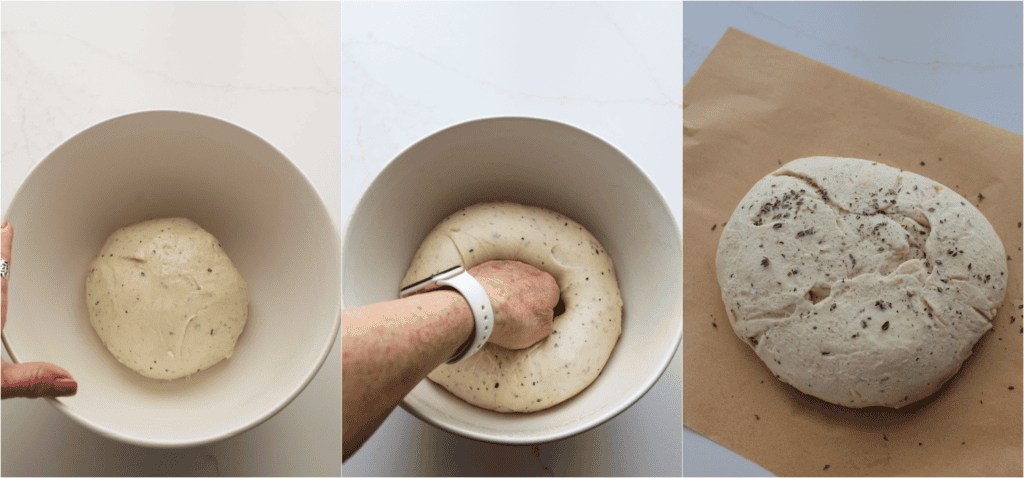
- Place the dough in a large oiled bowl and cover with plastic wrap. Let it double in size.
- Punch it down, then cover and let rise again until doubled.
- Turn the dough onto a large piece of parchment paper. Sprinkle lightly with chopped fresh herbs.
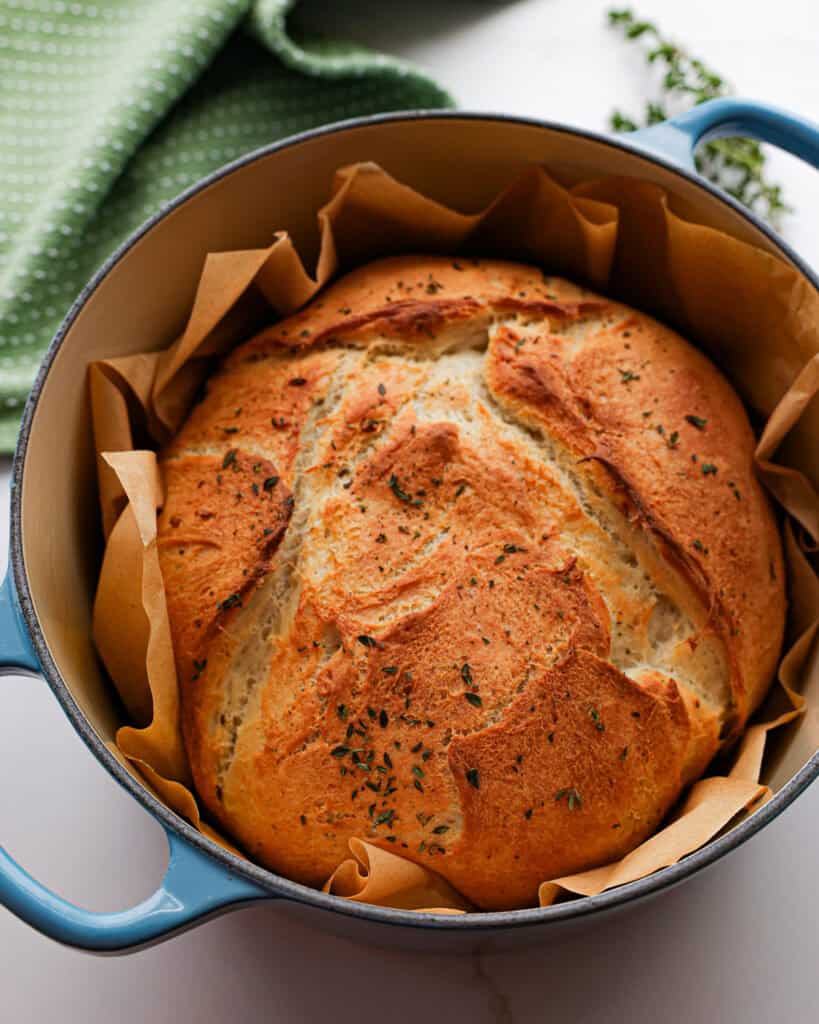
- Place the bread in a preheated Dutch oven. Bake covered for 25 minutes. Reduce the oven temperature, uncover, and bake for another 10 minutes. Cool on a wire rack for a couple of hours before slicing.
Baker’s Tips For The Best Cottage Cheese Bread
- Knead the dough until it pulls away from the side, has a smooth surface, and is tacky but not sticky.
- I love my Dutch ovens. They are fantastic for baking bread, braising meats, and cooking soup and stews. Review this inexpensive, highly rated Dutch oven from Amazon.
- Use a parchment paper overhang to help shape the dough, place it into the Dutch oven for baking, and remove it from the Dutch oven when it is hot.
- Please don’t get too hung up on shaping this loaf, since the dough is loose. Use the parchment paper to shape it, then place it in the Dutch oven. A 3 1/2 quart Dutch oven will help it hold its shape.
- The bread is done when an instant-read thermometer registers 195°F-200°F when inserted in the center of the loaf.
- Cool the bread for 1-2 hours before slicing with a serrated knife.
Serving Suggestions
- Boursin cheese pasta
- pasta bolognese
- slow cooker beef and vegetable soup
- marry me chicken pasta
- dill pickle chicken salad
- Olive Garden copycat salad
- Italian sausage pasta
- pasta con broccoli
Cottage Cheese Bread
This Cottage Cheese Bread is a protein-rich rustic loaf with a golden-brown crust and a springy crumb enhanced with garlic and thyme.
Print
Pin
Rate
Servings: 10 servings
Calories: 209kcal
Ingredients
- 1 cup cottage cheese
- ½ cup water warmed to 110 degrees F
- 1 ½ teaspoons active dry yeast
- 2 tablespoons granulated sugar
- ¼ cup unsalted butter melted and cooled to room temperature
- 1 teaspoon salt
- 3 cups bread flour
- 3 cloves garlic minced
- 1 tablespoon chopped fresh thyme
- 1 teaspoon dried marjoram
Instructions
- Using an immersion blender or a food processor, blend the cottage cheese.
- Gently whisk the warm water, yeast, and 1 tablespoon of sugar in a bowl. Cover the measuring cup or bowl with plastic wrap and let it sit for 7-10 minutes to bloom the yeast.
- In a stand mixer with the dough hook, combine the yeast mixture, blended cottage cheese, butter, salt, flour, garlic, thyme, marjoram, and the remaining sugar. Start on low speed (1) to incorporate the flour, then increase to speed 2 and knead for 7-8 minutes or until the dough pulls away from the sides, has a smooth surface, and is tacky but not sticky.
- Place the dough in a large oiled bowl and cover with plastic wrap. Let it sit until it has doubled in size.
- Punch it down, then cover and let the dough rise again until it doubles in size. Meanwhile, place a 3.5-quart (or larger) Dutch oven with a lid in the oven and preheat it to 425°F.
- Turn the dough onto a large piece of parchment paper. Sprinkle lightly with chopped fresh herbs.
- Carefully place the bread in the preheated Dutch oven. Everything will be very hot, including the lid and the handle. Bake covered for 25 minutes. Reduce the oven temperature to 375°F, remove the lid, and bake for another 10 minutes. The bread is done when an instant-read thermometer inserted in the center of the loaf registers 195°F-200°F. Cool on a wire rack for a couple of hours before slicing.
Notes
- Store the bread in an airtight or zipper bag at room temperature for up to 4 days or freeze the bread in a freezer bag for up to 2 months.
Nutrition
Calories: 209kcal | Carbohydrates: 31g | Protein: 7g | Fat: 6g | Saturated Fat: 3g | Polyunsaturated Fat: 0.5g | Monounsaturated Fat: 1g | Trans Fat: 0.2g | Cholesterol: 16mg | Sodium: 301mg | Potassium: 73mg | Fiber: 1g | Sugar: 3g | Vitamin A: 206IU | Vitamin C: 1mg | Calcium: 29mg | Iron: 1mg
Did You Make This Recipe?Mention @smalltownwomanfoodnut or tag #smalltownwomanfoodnut!



Leave a Reply